Talking about wellbeing in professional settings can no longer be limited to generic intentions. When teams are dispersed, service users require frequent follow-up or operations change quickly, what truly makes a difference is the ability to monitor concrete signals, receive alerts and act with more context.
This is where remote monitoring becomes operationally relevant. Quatenus MyPulse, a smart wristband connected to a centralised app, helps organisations support people with greater visibility and a stronger response capacity. Instead of relying only on direct observation, phone calls or delayed checks, organisations gain an additional layer of useful information to support people management.
In many professional settings, wellbeing is directly linked to the ability to understand what is happening at the right moment. This is especially relevant in environments involving physical effort, frequent movement, distributed teams or users who need closer follow-up.
When information arrives late, the response usually arrives late as well. That limits the ability to prevent issues, understand critical situations or act quickly. For that reason, people management increasingly benefits from solutions that strengthen operational visibility without making day-to-day routines heavier.
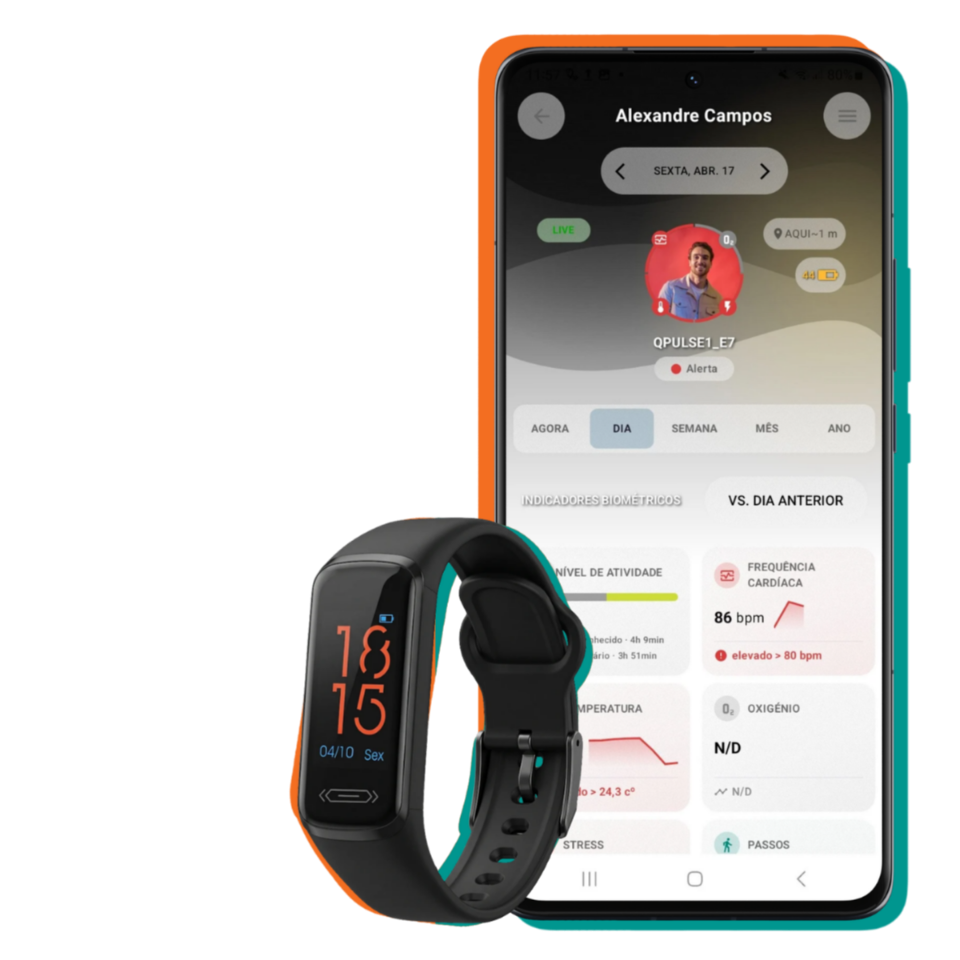
Quatenus MyPulse was not designed to overwhelm users with notifications. It was developed as a remote monitoring and wellbeing solution for business and institutional use, focusing on information that supports follow-up and response.
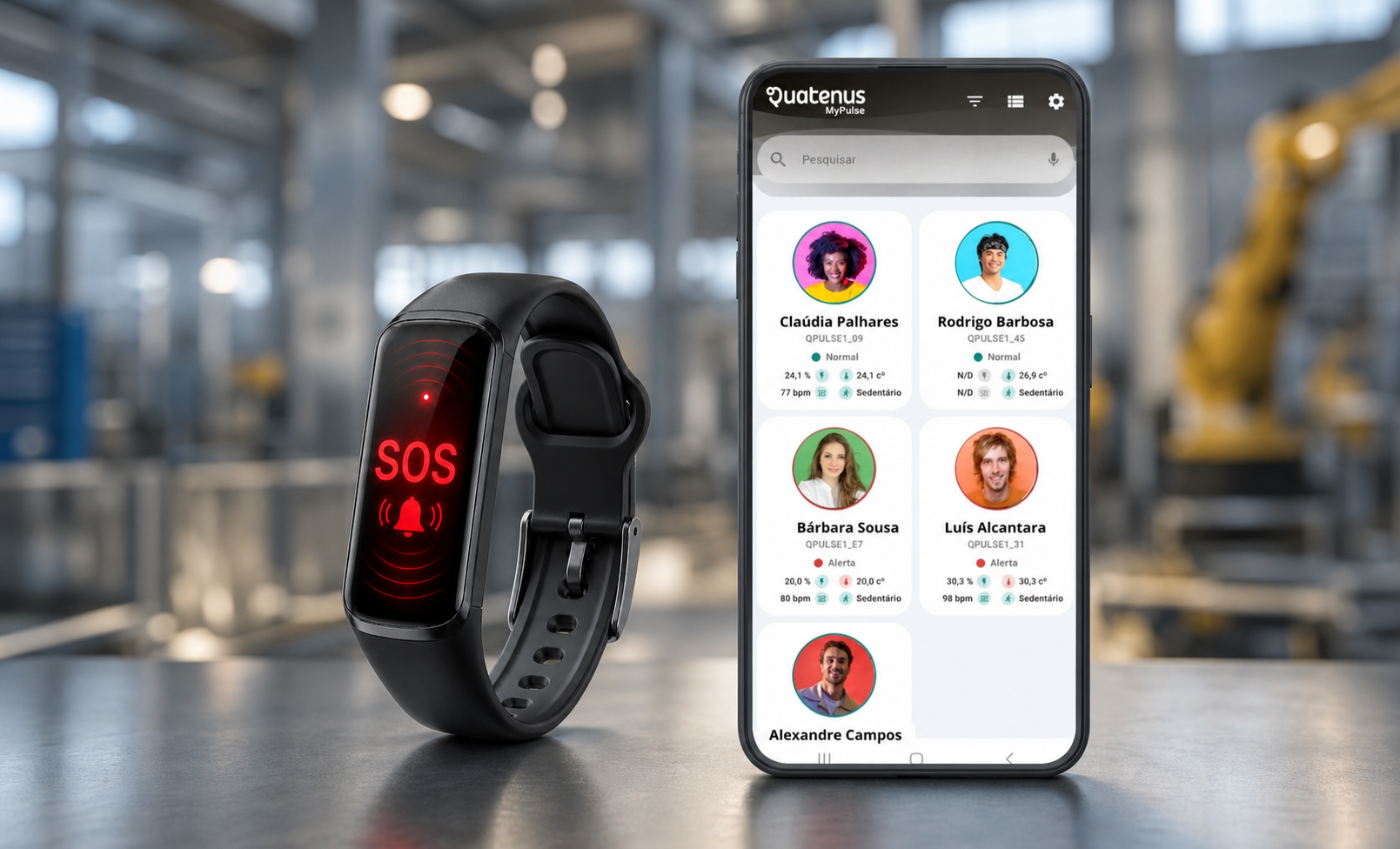
Connected to a centralised app, the wristband helps monitor indicators such as activity, temperature, real-time location, heart rate, HRV, blood oxygen level, stress and SOS alerts. Its purpose is not to replace clinical assessment. Its value lies in adding useful context so that teams and organisations can support people more clearly.
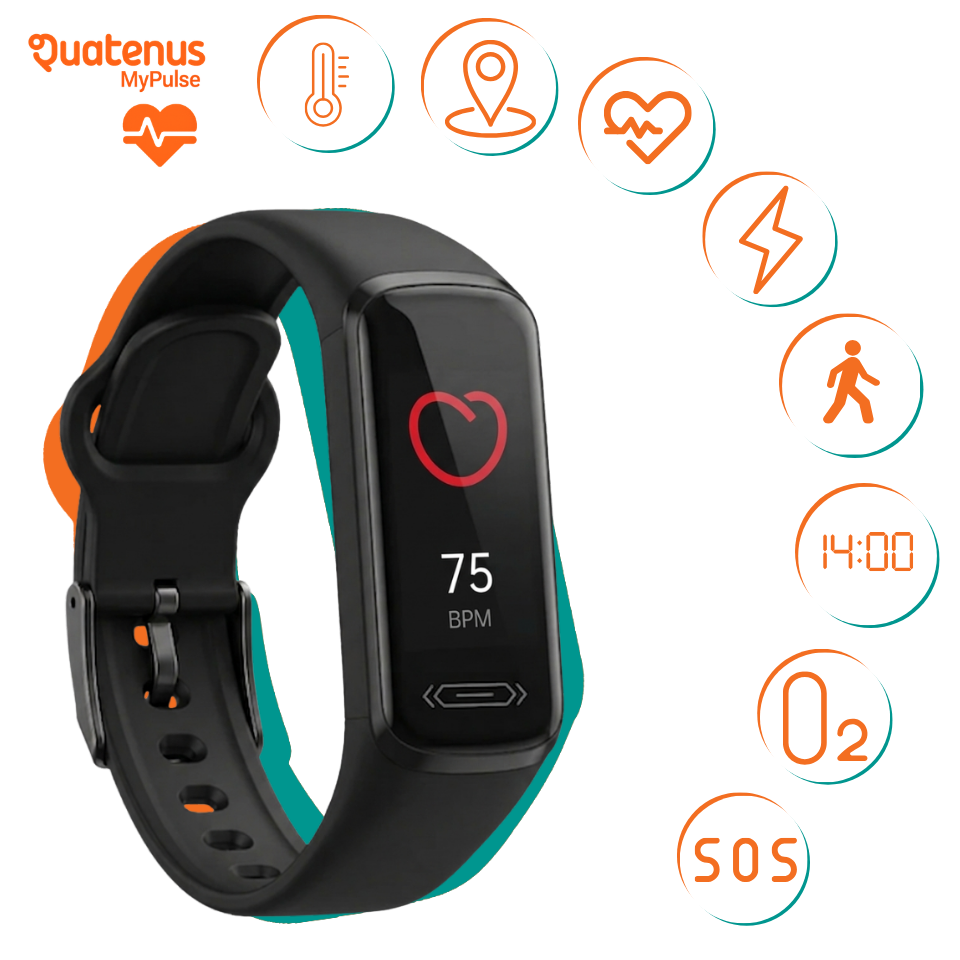
The value of this solution is measured by the practical usefulness of the information it provides. The wristband makes it possible to view activity, intensity and type of movement, helping teams understand patterns and relevant changes. Temperature adds context in demanding operations or harsher environments. Real-time location helps frame alerts and movements. Heart rate, HRV, blood oxygen level and stress indicators strengthen the overall picture of the user’s condition.
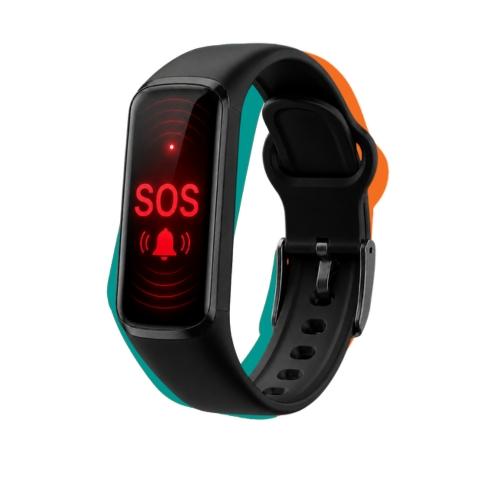
There is also a feature with immediate relevance in critical situations: the SOS alert. When combined with the app, this set of data is no longer dispersed and instead appears in an organised way by user or by team. That makes remote monitoring easier and helps teams act more quickly when the situation requires additional attention.
The practical applicability of this solution always depends on the setting, but there are scenarios where its value is especially clear. In industrial environments, it can help monitor effort, temperature, location, stress and alerts across field teams. In care homes and support centres, it can strengthen continuous follow-up with additional relevant information for care teams. In distributed teams, it helps organisations understand activity, movement and critical situations more quickly.

The common point across these scenarios is simple: when supporting people requires timely context, centralised information has a direct impact on how the organisation prevents issues, reacts and makes decisions.
In practice, the difference between dispersed data and centralised information is considerable. When relevant indicators are available in a single app, it becomes easier to monitor users individually, identify team patterns, receive real-time alerts and act with more context.
This strengthens people management because it reduces dependence on delayed checks and adds a more consistent view of operational reality. The result is a stronger ability to support teams, improve prevention and respond more clearly when timing matters.
The device format itself also matters. Quatenus MyPulse was designed to show only what is essential, helping to avoid distractions and keeping the wristband aligned with professional routines. Rather than competing with the task at hand, the technology supports follow-up and strengthens operational usefulness.
Want to understand how remote monitoring can support wellbeing and people management in your context?
Explore Quatenus MyPulse and see how centralised information can help you act faster and with greater clarity.
Know MoreFAQ
No. Location is only one of the available elements. The solution can also monitor activity, temperature, stress, heart rate, HRV, blood oxygen level and SOS alerts.
It can be used in industry, care homes and support centres, field teams and other settings where supporting people with more context is important.
Yes. The app centralises information and makes it possible to monitor users individually while also providing a broader view by team.
It is useful in critical or unexpected situations in which the user needs to signal the need for help quickly, strengthening response capacity.
No. It is a remote monitoring and wellbeing solution for business and institutional use. It does not replace diagnosis or medical follow-up.
Related