Safety on Portuguese beaches does not depend only on the presence of people on the sand. It also depends on how resources are organised, how vehicles are managed and how teams are able to respond across coastal areas with different surveillance needs.
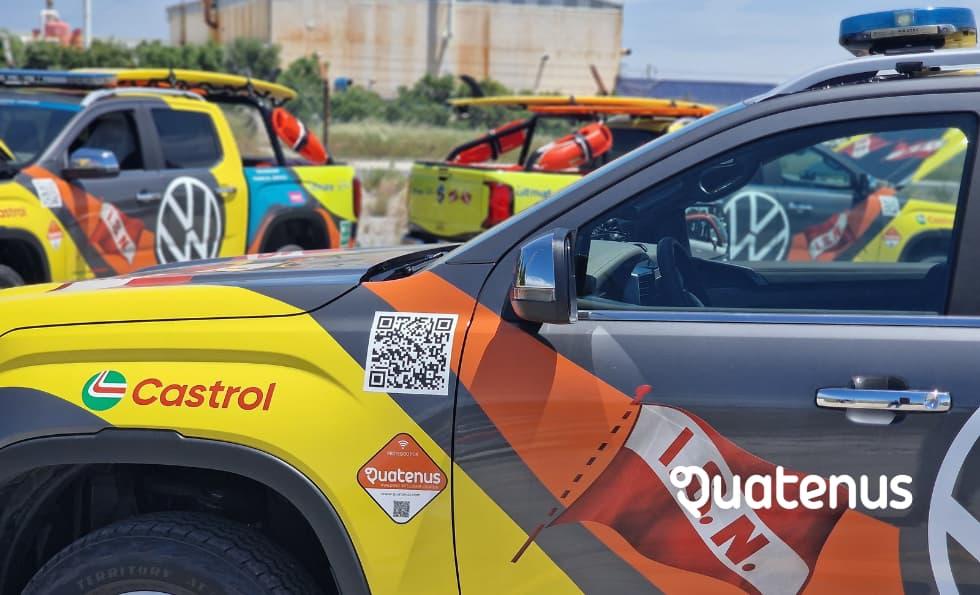
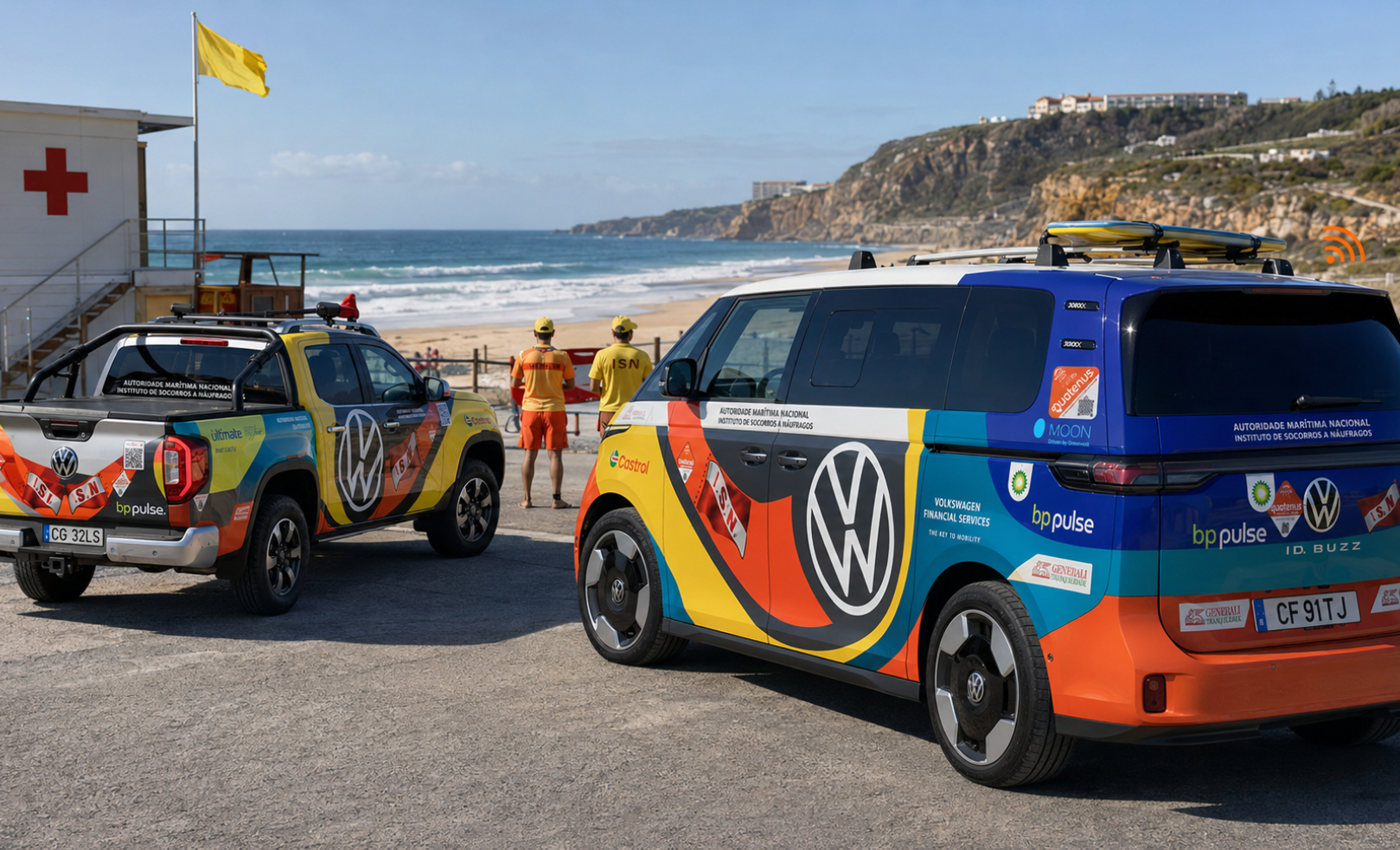
In Portimão, the Instituto de Socorros a Náufragos received new vehicles to reinforce beach surveillance during the 2026 bathing season. The initiative is part of the SeaWatch Project, active since 2010, and includes the continued collaboration of Quatenus Portugal, an ISN partner for 13 years in the management of these vehicles.
During the bathing season, beach surveillance involves different teams, organisations and operational resources. On beaches with permanent surveillance, response is more structured. In areas without continuous presence, the ability to mobilise resources becomes even more important.
This is precisely where the SeaWatch Project plays a relevant role. Created to increase safety in coastal areas, the project strengthens operational presence in locations that require attention, mobility and intervention capability.
The availability of vehicles prepared for this scenario helps bring support resources closer to the areas that need them most. When these vehicles include equipment such as automated external defibrillators, their importance becomes even clearer in an emergency response context.
The ceremony to receive the new vehicles took place in Portimão and was chaired by Admiral Jorge Nobre de Sousa, Chief of Staff of the Navy and National Maritime Authority, with several partner organisations present, including Quatenus.
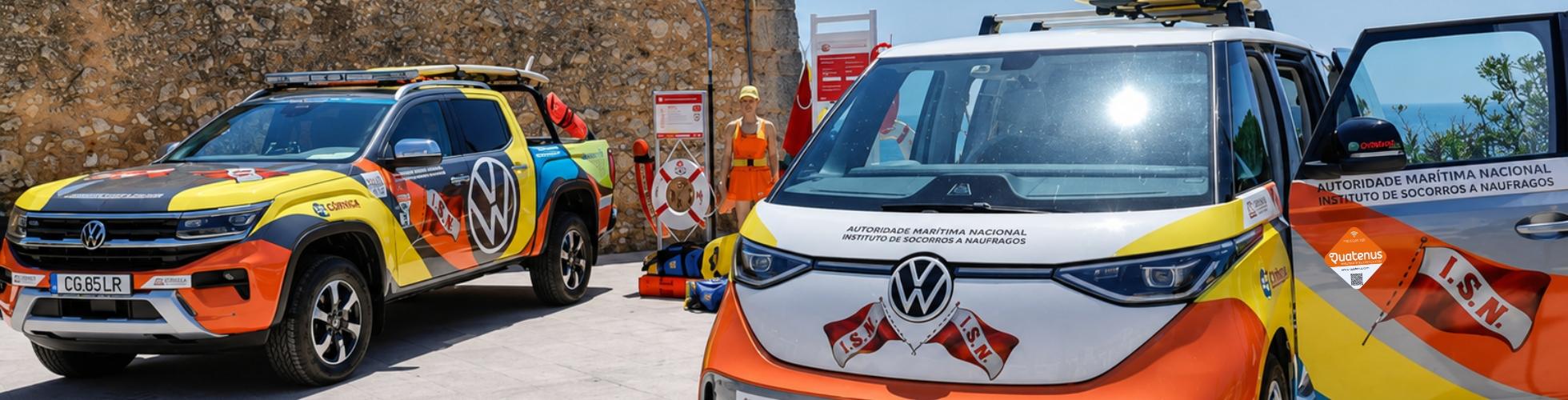
Within this collaborative ecosystem, some brands are responsible for fuel, insurance and vehicle availability. Quatenus is responsible for managing these vehicles, contributing to an operation in which organisation, monitoring and visibility are essential.
GPS fleet management becomes more valuable when it is seen not only as technology, but as practical support for missions that require readiness, trust and coordination.
In an operation linked to beach safety, each vehicle represents more than a means of transport. It represents the ability to reach a coastal area, support a team, respond to an incident or reinforce presence on beaches without permanent surveillance.
GPS fleet management helps place vehicle use within a more organised framework. For operational teams and the organisations involved, this means greater ability to monitor available resources and better alignment between resources and needs in the field.
In this case, technology does not replace the human mission. It supports it. It helps make the operation more visible, more structured and better prepared for contexts in which speed and coordination can make a difference.
In 2025, the SeaWatch Project enabled 72 rescues, 173 first aid assists and 13 successful searches for missing children. These results show the importance of an operation prepared to act in different situations during the busiest beach season.
The partnership between Quatenus Portugal and ISN, which has continued for 13 years, reflects sustained collaboration around a clear mission: strengthening safety on Portuguese beaches.
When technology, operational resources and specialised organisations work together, vehicle management is no longer just an internal process. It becomes part of a broader response designed to protect people and support those working in the field.
GPS fleet management is particularly relevant in operations that depend on mobility, vehicle availability and coordination between teams. In the context of the SeaWatch Project, this management supports a public mission in which resources need to be ready to respond across different points of the coast.
For organisations with mobile operations, technology can contribute to less reactive decisions and a clearer view of how resources are used. This makes it possible to manage vehicles with greater confidence, reduce operational uncertainty and support teams working outside fixed environments.
Quatenus Portugal’s experience with ISN shows how technology can have practical application in contexts of high responsibility, where every resource has a specific role in people’s safety.
The value of technology lies in how it translates into real support for those who decide, coordinate and act. In the SeaWatch Project, vehicle management is not the centre of the message, but it is an important part of the structure that allows ISN to strengthen its presence on Portuguese beaches.
Quatenus Portugal contributes its experience in GPS fleet management to an operation that combines prevention, response and safety. More than monitoring vehicles, it is about supporting a mission with a direct impact on people’s lives.
Discover Quatenus Portugal’s GPS fleet management!
And learn how technology can support mobile operations with greater organisation, visibility and confidence.
Ask for DemoFAQ
The SeaWatch Project is an initiative active since 2010 that aims to increase safety in Portuguese coastal areas, especially on beaches without permanent surveillance.
Quatenus Portugal is responsible for managing the vehicles associated with the SeaWatch Project, supporting the operational organisation of the resources used in coastal surveillance.
Because it helps structure vehicle use, support operational monitoring and provide greater visibility over available resources in coastal areas with different needs.
In 2025, the SeaWatch Project enabled 72 rescues, 173 first aid assists and 13 successful searches for missing children.
According to the project briefing, the new vehicles include automated external defibrillators, strengthening the resources available during the 2026 bathing season.