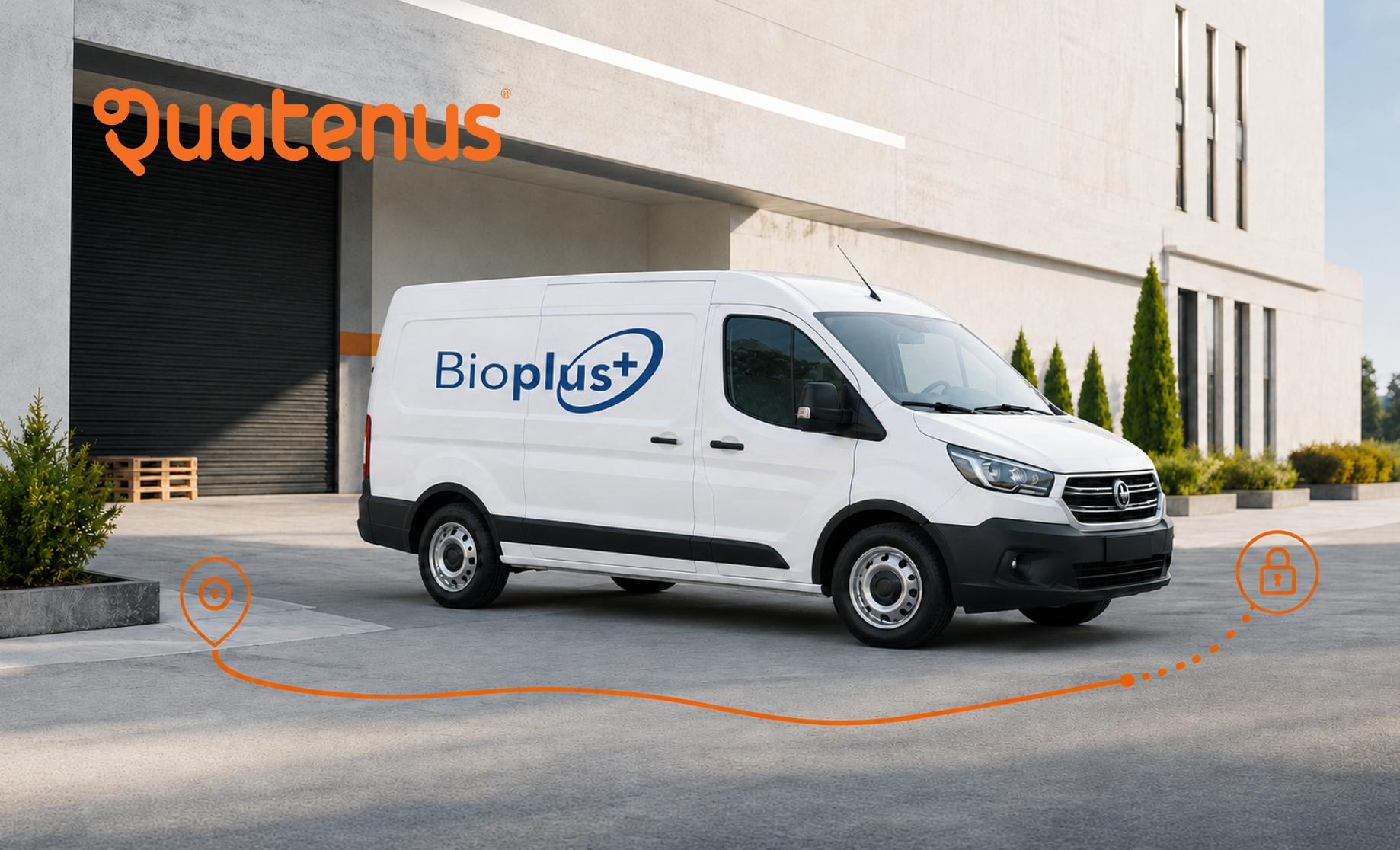
Before an IT infrastructure becomes operational or communication materials reach their destination, work needs to move beyond the office. People, equipment and materials travel to the client. Overseeing those journeys is also part of managing a service business.
Advanced Expansion brings together expertise in technology, IT infrastructure and graphic communications. To oversee its fleet, the company uses Quatenus Fleet, a GPS fleet management solution. Its fleet also has the vehicle immobilisation option.
Advanced Expansion’s portfolio covers software development, network and IT infrastructure installation, technology maintenance and the production of graphic communication materials. Each area has its own processes and requirements. When work requires a presence at a client’s premises, the journey becomes part of delivery.
A technical intervention requires preparation and the transport of the necessary resources. A communications project may involve materials that need to reach an installation site. In businesses with this profile, vehicles provide a practical link between work prepared and work carried out in the field.
Mileage helps describe a journey. Understanding its purpose requires connecting it to the destination and the service that justifies it. The same applies to stops: their duration may reflect an intervention, a delivery or another operational requirement.
This context allows vehicle use to be assessed against criteria appropriate to the activity, rather than comparing journeys as though they all served the same purpose.
Quatenus provides solutions for overseeing vehicles and analysing information about their use. The Fleet range used by Advanced Expansion brings together GPS locations, routes and stops within a fleet management environment.
These data address complementary needs. Location information shows a vehicle’s position. Historical records allow completed journeys to be reviewed and vehicle use to be understood over time.
Knowing vehicle positions helps management understand how the fleet is distributed in the field. When assessing a change to the plan, this information can be considered alongside people’s availability, the resources required and existing commitments.
The vehicle’s position therefore provides a concrete input for the decision. Choosing the resources for each service still depends on the requirements of the work.
Historical records allow routes and stop durations to be analysed, revealing patterns that deserve attention. Recurring journeys, travel between sites and differences in use can be reviewed using fleet records.
For example, in a service business, an extended stop may accompany a demanding technical intervention. This example illustrates why the data should be interpreted alongside information about the work carried out, rather than automatically treating time spent at a location as inefficiency.
Advanced Expansion’s fleet also has the vehicle immobilisation option. This feature adds a control capability to the solution adopted by the company.
GPS monitoring and the immobilisation option serve different functions within fleet management. The former provides information about locations and journeys; the latter is an additional option whose implementation depends on the equipment and configuration specified for the vehicles.
Bringing fleet data together supports analysis across the operation, but does not remove differences between services. A vehicle supporting an installation may show a different usage pattern from one making short journeys between several destinations.
For management, the useful step is to connect the available information to practical questions:
These questions help turn activity records into a basis for analysis while preserving the context of each assignment.
Advanced Expansion’s use of Quatenus Fleet places fleet management within a business combining technology and communications. The services are distinct, while the vehicles supporting them can be overseen through a shared view.
This connection gives GPS fleet management its relevance for service businesses: providing information about mobility and allowing that information to inform decisions about work in the field.
Give your management team an integrated view of the vehicles supporting your company’s different services.
Request a Quatenus demonstration to explore how the Fleet range can fit your operation.
Ask for DemoFAQ
Yes. It allows businesses to oversee vehicles supporting journeys and on-site interventions, with information about locations, routes and stops. These data help managers analyse the mobility associated with service delivery.
The Quatenus solution provides routes, stops, timings and fleet usage information. Available features depend on the contracted solution and the configuration implemented.
Journey data should be connected to the services delivered. Distances and stop durations have different meanings depending on the destination, planned work and requirements of each activity.
Yes. Advanced Expansion’s fleet has this option within its Quatenus solution. For a new implementation, the equipment, compatibility and operating conditions specified for the vehicles need to be confirmed.
Location and historical records allow journeys and stops to be monitored, but do not independently prove the completion or quality of an intervention. That assessment requires information about the service carried out.
Related